

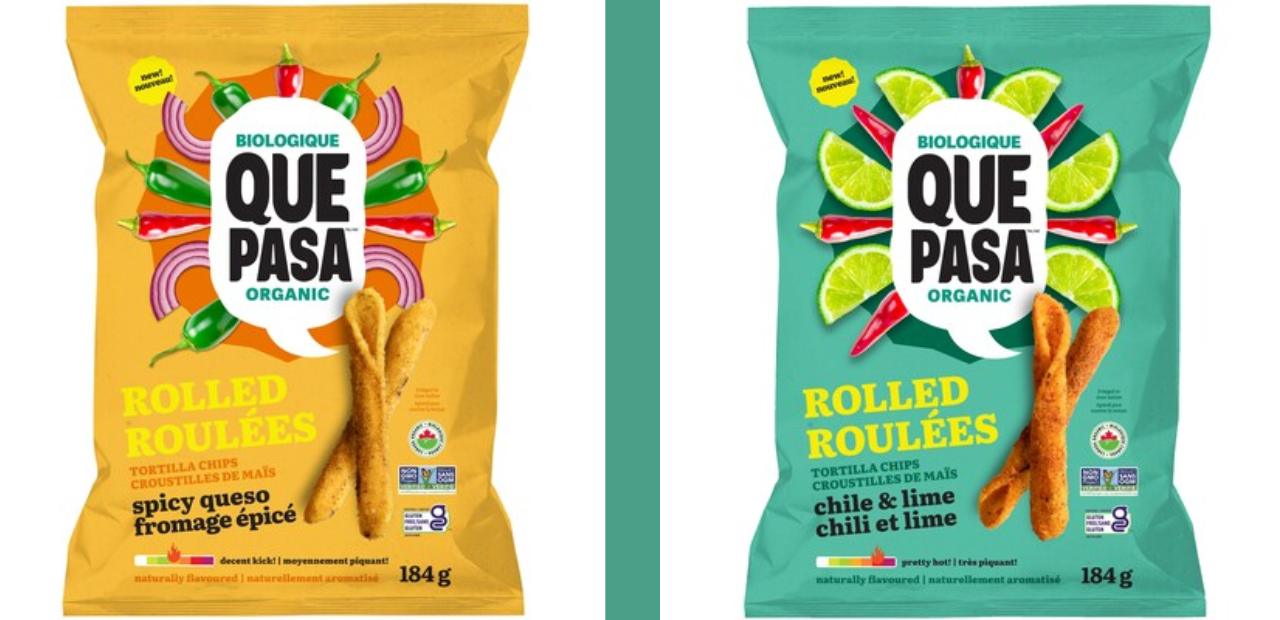
Nature’s Path Foods Inc., a Canadian organic food company headquartered in Richmond, BC, has announced the release of a new product under its Que Pasa brand: Organic Rolled Tortilla Chips. The launch, dated August 19, 2025, introduces two flavours — Chile & Lime and Spicy Queso — both made in Canada and now available at major retailers nationwide and in select U.S. markets, listed at $74 CAD for the multi-pack.
The chips are produced using volcanic stone-ground heirloom corn and are seasoned with culinary-grade spice blends. According to the company, the product is free from artificial flavors, dyes, and genetically modified ingredients.
Nature’s Path positions the chips as part of its broader commitment to organic and sustainable food production. The company emphasizes small-batch manufacturing and the use of certified organic ingredients. While the product is marketed as a “conversation starter,” the launch also reflects growing consumer interest in snacks that align with broader health and environmental values.
The release adds to the portfolio of Que Pasa, a brand known for its organic tortilla chips and Mexican-inspired offerings, just in time for the Labour Day weekend, which heralds the countdown to the start of hockey season in October in Canada.
The release of a new product under its Que Pasa brand, Organic Rolled Tortilla Chips, aligns with the growth observed in the organic snack market. The global organic snacks market was valued at USD 8.45 billion in 2024 and is expected to grow to USD 9.22 billion in 2025. It is forecasted to reach USD 16.35 billion by 2033, with a consistent CAGR of 7.5% from 2025 to 2033.
Organic chips are usually free from artificial additives, preservatives, and flavour enhancers found in traditional snacks. Their use of natural, high-quality ingredients and sustainable farming has made them seen as a premium, better product.
Consequently, they attract a wide range of consumers—health-conscious individuals wanting fewer chemicals and eco-conscious buyers supporting sustainable agriculture.
Major corporations are increasingly embracing the trend toward natural ingredients. PepsiCo announced this year that it had completed the acquisition of Garza Food Ventures LLC, operating as Siete Foods, for $1.2 billion. Siete Foods is known for its grain-free tortilla chips and other healthy snack products. In 2023, PepsiCo held a 4.3% share of the packaged food market in Canada, valued at CAD $3300.7 million.
As per a report by PWC, one of the world’s largest professional services networks, known for its work in audit and assurance, consulting, and tax service, changes in the Canada-US trade and political landscape increased Canadian consumers’ preference for local products. Nearly half of Canadian consumers, 46%, consider domestic sourcing their top sustainability factor in food purchases, driven by a desire to support the local economy and beliefs that locally produced food is healthier.
But a significant challenge remains: the perceived price premium on domestically sourced goods. “Made in Canada” labels may capture consumers’ initial interest, but PWC analysis suggests that, for many shoppers, purchasing decisions still hinge on price.
20% of Canadian consumers switch brands mainly for local products, but price remains the top reason.
75% of Canadian consumers are willing to pay more for local food, a number that increased with US trade disputes. However, 62% prefer cheaper imports over expensive domestic products.
This gap highlights the difference between consumers’ preferences and their actions: while they value local sourcing, their willingness to pay extra is frequently challenged by cost considerations.

With Nature’s Path launching its Que Pasa Organic Rolled Chips proudly made in Canada, the brand is tapping into a growing appetite for local, sustainable products. While Canadian consumers increasingly express a preference for domestically sourced goods, price remains a sticking point — a tension mirrored in the broader dynamics of cross-border trade.
As the puck drops on another NHL season this October, the Canada–U.S. rivalry is once again set to dominate headlines — but the competition may extend beyond the rink and into the snack aisle.
Whether it’s hockey or tortilla chips, the battle for loyalty is fierce, and in both arenas, Canadians are looking for something that reflects their values without breaking the bank. In a market where flavour, ethics, and origin all matter, Que Pasa’s latest launch may be more than just a snack — it’s a statement.